Red-Silk Covenants, Betrothal Writs & Ancestral-Hall Law
Why mortal gentry treat marriage as a silver ledger—and how ancient Dao-Partner oaths bind equal hearts across tribulations.
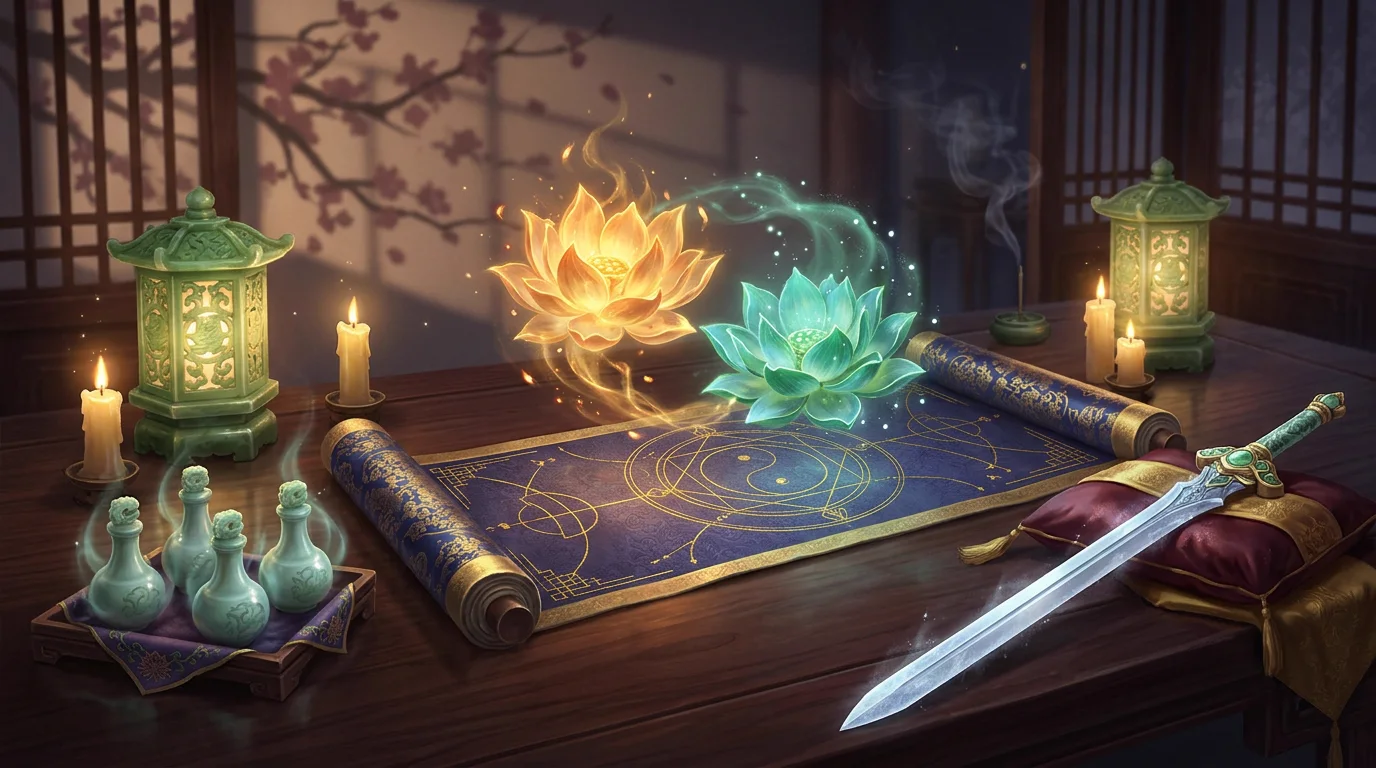
“Clan betrothal paper tears the day a boy’s dantian dims; red silk tied by choice over a shared cauldron holds when heaven’s thunder falls.”
Gentry Betrothal Writs and Maidservant Deeds
Among mortal and low-realm borderland clans, marriages are negotiated between patriarchs as Vermilion Betrothal Writs backed by silver-tael bride-gifts and herb-field dowries. Should an heir’s cultivation falter, rival families routinely march to the clan gate bearing return-silver to demand a public Writ of Severance—humiliating the fallen branch before the ancestral tablets. Conversely, household maidservants remain bound by childhood indenture deeds until formally redeemed or elevated.
The Red-Silk Dao Covenant
Older cultivator traditions dating back to the Twin Sovereigns of Harmony reject hierarchy and concubinage in favor of the Red-Silk Dao Covenant: partners tie unadorned crimson silk ribbons beneath evening lamps or open stars, swearing equal standing at the hearth, unhidden meridian trust, and shared custody of household heirs.
✦ Echoes in the Novel
This cultural contrast drives the emotional heart of Volume 1—from Su Lian’s refusal to abandon a "ruined" young master (Chapters 2 & 7), to tying red silk ribbons with Su Lian and Wen Shuwan (Chapters 34 & 43), to answering Lui Ling’s clan annulment at the valley gates (Chapter 36).