Wooden Debt-Tallies, Spirit Stones & Salt-Iron Rationing in Canglie
Why mortal villagers never touch a single Spirit Stone—and how notched locust-wood tallies, bog-salt monopolies, and Kurotetsu’s Three Edicts remade daily life.
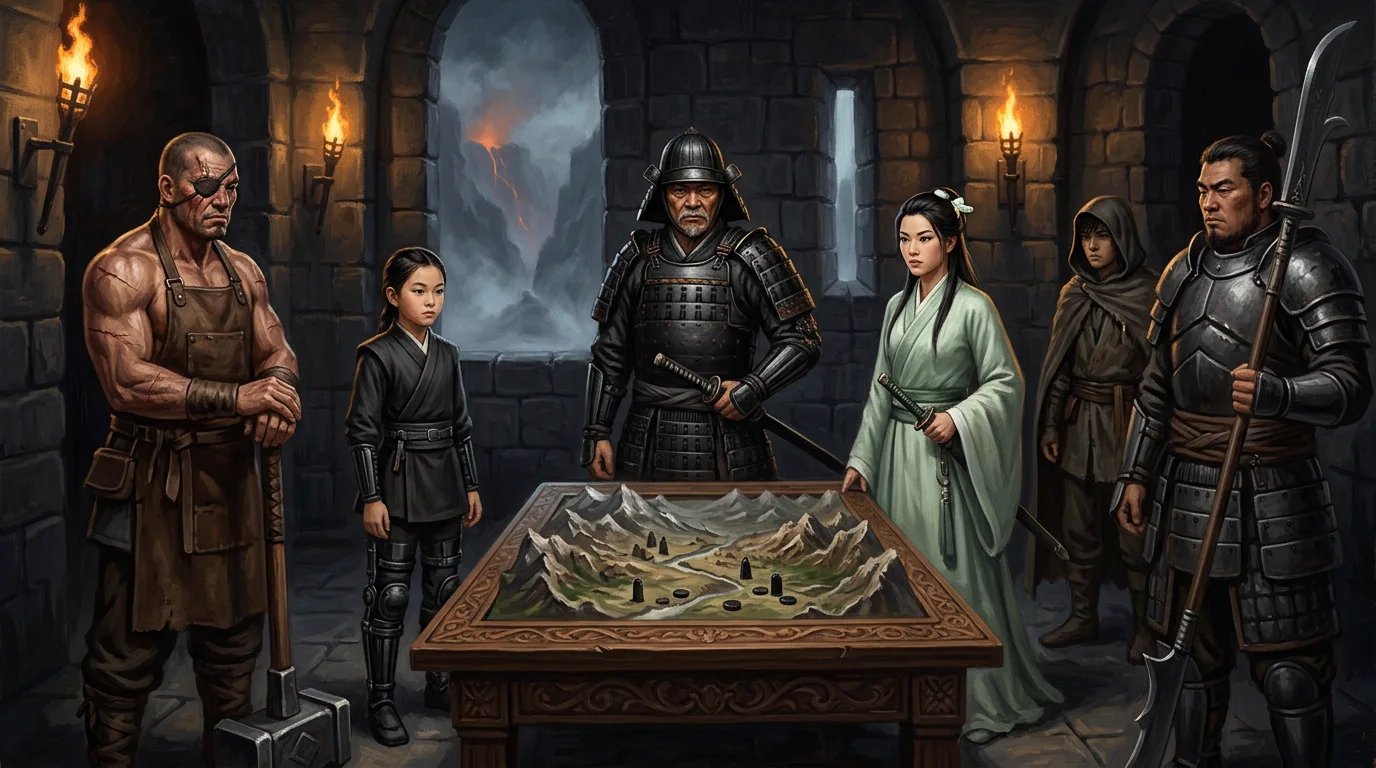
“One fingernail-sized spirit stone buys twenty ox-carts of husked millet—yet a young master crushes ten thousand of them into dust because a mud-born cripple bruised his pride.”
The Ten-Thousand-Harvest Chasm
Across Cangwu Province, Spirit Stones mined from upper-vein caverns circulate exclusively above the clouds. To an unawakened peasant in Ash-Reed Village, Spirit Stones are mythic jewels: a single Low-Grade Spirit Stone exchanges in county towns for thirty silver taels—roughly ten full years of a farming household’s surplus millet. Down in the reed-marshes, daily trade runs on braided strings of iron-copper cash, husked foxtail millet, and coarse grey bog-salt bricks.
Split Locust-Wood Tallies & The Salt Monopoly
To ensure lowland villages never slipped free of the Protection Charter, Outer Sect bailiffs outlawed private salt-panning along caldera mineral creeks. Every November before curing winter turnips and pork scraps, village heads had to borrow sect salt-bricks recorded on split locust-wood tallies: one notched half kept by the household, the master half locked in the bailiff’s saddlebag at thirty-percent seasonal compound interest. A single sleet-blighted spring doubled the notches overnight until teenagers were seized against the wood.
✦ Echoes in the Novel
This visceral economic gulf sharpens two of Volume 1’s most cathartic beats: Tetsumori Genjiro feeding Bailiff Zhou San’s notched locust-wood debt ledgers straight into Ash-Reed’s bonfire (Chapters 5–6), Core-Heir Zhai Lingxiao’s obscene 10,000-Spirit-Stone bounty—enough wealth to feed a hundred thousand mortals—placed on a "cripple’s" head (Chapter 21), and Kurotetsu Keep’s Three Iron Edicts replacing compound tallies with transparent Sengoku granary shares (Chapter 28).